AI makes it incredibly easy to spin up polished interfaces. And while we can build faster with AI, getting a team to agree on what to build is still surprisingly hard. Whether it’s misaligned goals, lack of clarity in the product roadmap, or sometimes it’s just hard to visualize an interface through words and a low-fidelity wireframe.
On the other side of the spectrum, like a high-fidelity prototype, it's natural for stakeholders to assume that the thinking is finished, too. Instead of focusing on the why behind a product or feature, you're fixated on the details that don’t actually matter…yet.
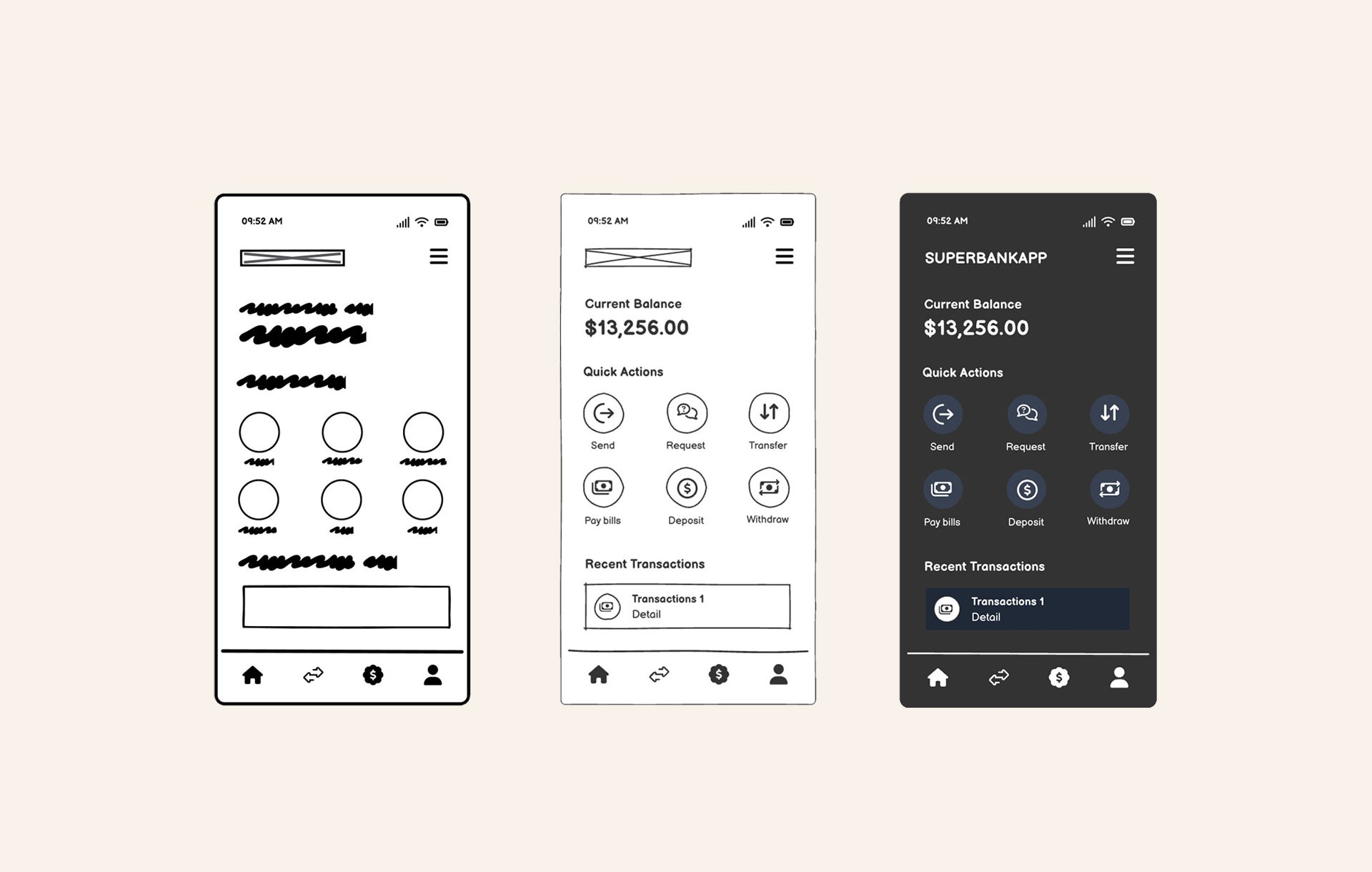
Low-fidelity prototyping keeps things rough and sketchy so the work feels flexible, which shifts the conversation back to the logic, flow, and the why underneath the visuals. It gives teams space to validate the structure without getting pulled into debates about colors, spacing, or other surface details.
This mindset helps teams avoid the “speed trap” that modern tools create. And with Balsamiq, you get a space built specifically for this kind of early-stage product thinking—a place to align on the big picture so that when you do move into high-fidelity, everyone is already moving in the same direction.
That’s why low-fidelity prototyping is so helpful.
What is low-fidelity prototyping?
Low-fidelity prototyping is a way of thinking, not a type of design deliverable.
It’s the practice of working at a level of detail that keeps the focus on structure, flow, and intent. It helps teams externalize assumptions early, before they harden into your product roadmap. And it gives you room to explore ideas without committing to any one direction too soon.
Think of low-fidelity prototyping as a safe space for problem-solving.
Key characteristics of low-fidelity prototypes:
- Abstract by design. They show the idea, not the decorations.
- Cheap to change. You can redraw, reorder, or rethink without friction.
- Easy to discard. Nothing is so precious that it can’t be tossed aside.
- Focused on how it works. Keeps the conversation centered around functionality.
Low-fidelity prototyping is where you explore flows, logic, and tradeoffs. You can use them to ask questions like, “What should this do?” before worrying about how it should look.
Why bother with low-fidelity if you can start with AI?
AI is incredible at producing screens fast. But they generate answers, not alignment. A polished screen can feel convincing. It can look “done.” But that doesn’t mean it’s right.
Matteo Frana, CEO and CTO at React Bricks said it best:
"Speed is great when you’re building, but it can really backfire when you’re deciding what to build. That part can’t be rushed or automated: it’s where a product manager’s judgment and vision actually matter. Quick brainstorms and half-baked PoCs rarely tell you if an idea is truly worth pursuing."
 Matteo Frana,CEO & CTO @ React Bricks

Here’s what happens when teams jump straight into high-fidelity or AI-generated UI:
- The team assumes the direction is already chosen.
- Stakeholders hesitate to give honest feedback.
- People focus on colors and spacing instead of logic and flow.
- The design feels locked in, even if it’s wrong.
Jumping into high-fidelity prototypes too early creates false confidence. It shuts down the curiosity and disagreement that lead to better decisions.
Low-fidelity gives you the space to disagree safely without worrying that you’re criticizing something someone spent a lot of time perfecting. At this stage, you can test your ideas before they become expensive.
As AI accelerates creation, low-fidelity gives you a way to evaluate ideas thoughtfully and choose the ones worth pursuing—helping you accelerate the right things.
Why do some product teams skip the low-fidelity stage?
Even though low-fidelity is valuable, some teams skip it by saying things like:
- “We already know what we’re building.” This usually means the team has a solution in mind, not a shared understanding of the problem.
- “Stakeholders don’t get rough sketches.” Stakeholders understand more than we give them credit for. They just need context. And low-fidelity prototypes actually help them focus on the most important details.
- “Our design system makes high-fidelity fast.” Fast to build doesn’t mean fast to align.
- “AI can generate it anyway.” AI can generate options, but it can’t tell you which one is right.
If you need a reminder of why human judgment still matters, Khaled Zaky said it best:
"Product thinking is about judgment, prioritization, and connecting customer context to long-term vision, which no model can fully replace. In other words, AI is a tool, not the compass."
Khaled Zaky,Senior Director, Lumina Platform @ RBC Borealis

When you skip low-fidelity work, you aren't actually saving time; you’re just pushing the cost of your mistakes further down the road. It feels faster in the moment to jump straight to the “real” designs, but it creates a ripple effect of problems and a mountain pile of tech debt that are much harder to fix later.
The more shortcuts you take to get to a finished product, the more expensive the rework becomes. If you find a flaw during a sketch, it takes seconds to erase. If you find it after the product is built, it can take weeks to pivot.
The biggest risk is that your team might ship the wrong thing with total confidence. A beautiful interface can hide a broken process, leading to a product that looks great but fails the user. When that happens, trust erodes—not just with your customers, but within your team. Real speed comes from making the right decisions early, not just making things look complete.
What is low-fidelity prototyping best at?
Low-fidelity is built for the messy, early stages of a project—the moments where you need to test assumptions and solidify your foundation before building.
At this stage, you can sketch five different ideas in the time it takes to polish a single screen. Because nothing looks final, it’s easier to ask “What if?” and stress-test your logic. If an idea fails, you can toss it out without feeling like you’ve wasted your afternoon.
Low-fidelity is also a great translator for the cross-departmental conversations. A simple sketch is easy for anyone—PMs, engineers, or founders—to understand and react to, even if they don't have a design background. When you see a flow laid out simply, gaps and contradictions in the logic jump out. It makes those invisible problems actually visible.
Because these sketches are easy to share and annotate, they also make async feedback a lot smoother. Teammates can use them as an open invitation to contribute and think visually without the pressure of a formal meeting.
This is exactly why we made Balsamiq. The “sketchy” look is intentional—keeping the conversation focused on the big picture makes people feel comfortable giving honest feedback.
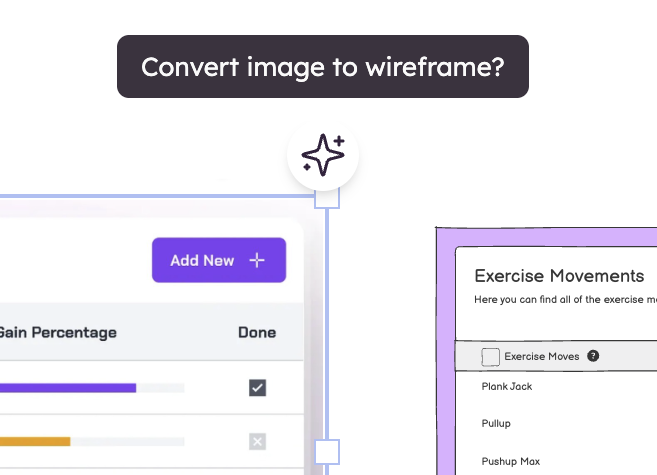
With Balsamiq’s image-to-wireframe AI (Beta), you can now combine that clarity with a bit more speed. You can use AI to generate a starting point and then use the wireframe to evaluate and refine it. It’s the best of both worlds: the speed of automation with the deliberate thinking of a sketch.
Do you need low-fidelity or high-fidelity?
You need them both. But more importantly, you need to know when to use them.
Product development is a series of decisions. If you add too much detail too soon, you end up answering questions about colors, fonts, buttons, and links before you’ve answered questions about logic and value. The goal is to match the level of detail to the question you’re currently trying to solve.
Think of the process more as intentional fidelity that occurs in three stages:
- Low-fidelity (explore and align): Use this to get ideas out of your head. It’s for sketching multiple paths, finding the holes in your logic, and getting the team to agree on the “what” and the “why.”
- Mid-fidelity (validate structure): Use this to test how things flow. It’s for checking if the navigation makes sense and if the user can actually complete their task.
- High-fidelity (refine and execute): Use this to polish the “how.” This is where you finalize branding, accessibility, and visual delight.
Low-fidelity acts as the gate that protects the rest of your process. By forcing the team to stay in a rough state a little longer, you ensure the foundation is strong.
When you get the structure right in low-fidelity, high-fidelity becomes much easier to execute. You aren't just making a screen look good; you're polishing a solution you already know works.
How are teams using low-fidelity today?
We see teams use low-fidelity in all kinds of practical, everyday ways as a natural part of how they think through a problem.
Here are a few ways we see it happening in the wild:
- Pre-writing PM: A Product Manager sketches a flow before writing a product requirements doc. It helps them visualize the story and spot logic gaps before they commit a single word to a document.
- Measure twice engineer: An engineer wireframes an internal tool before writing the first line of code. This surfaces edge cases and prevents wasted effort on features that don't actually work.
- Bootstrap founder: A founder sketches an MVP concept to show potential customers. It makes the idea concrete enough to test without over-investing in a product that might need to pivot tomorrow.
- AI-first designer: A team clarifies their logic in a wireframe before they ever touch an AI prompt. This ensures the AI output is grounded in real requirements rather than just how it looks.
We spoke with a founder who shared his thoughts about the importance of not missing a step.
Every time we skip wireframing, we regret it. Misunderstandings slow us down. But when I open Balsamiq—even mid-call—I can get my point across in two minutes.
Across all these examples, the pattern is the same. Low-fidelity usually starts as a solo exercise to get thoughts in order. Then, it’s shared with the team to invite honest feedback. Finally, it evolves—it isn’t replaced—into the mid-fidelity or high-fidelity work that follows.
Low-fidelity is the seed that everything else grows from. If you get the seed right, the rest of the project has a much better chance of thriving.
Balsamiq is made for low-to-middle fidelity thinking
Balsamiq focuses entirely on the phase where ideas are still taking shape. By prioritizing speed and clarity over visual perfection, we provide a dedicated space for the fast, messy work that needs to happen before a single pixel is polished.
The hand-drawn, “sketchy” look serves a functional purpose. Since the work resembles a whiteboard drawing, it naturally invites honest feedback. This style signals to your team that the idea is still in motion, encouraging stakeholders to question the underlying logic rather than getting distracted by button colors or fonts.
Accessibility is also a core part of the tool. Balsamiq is simple enough for anyone to use—PMs, engineers, and founders can all jump in to make their ideas concrete. It stays out of your way, allowing you to iterate quickly without breaking your creative flow.
Low-fidelity prototyping is still important for product teams. When everyone and their uncle are generating layouts and interfaces instantly with AI, maintaining a strong foundation of product thinking is what will ultimately set you apart.
Speed can be a trap, especially when it moves you in the wrong direction. Low-fidelity work keeps your team grounded, protecting your time and resources by forcing you to validate the core experience first.
Low-fidelity prototyping provides a final voice of reason, ensuring you’re building the right thing before the momentum of production takes over.