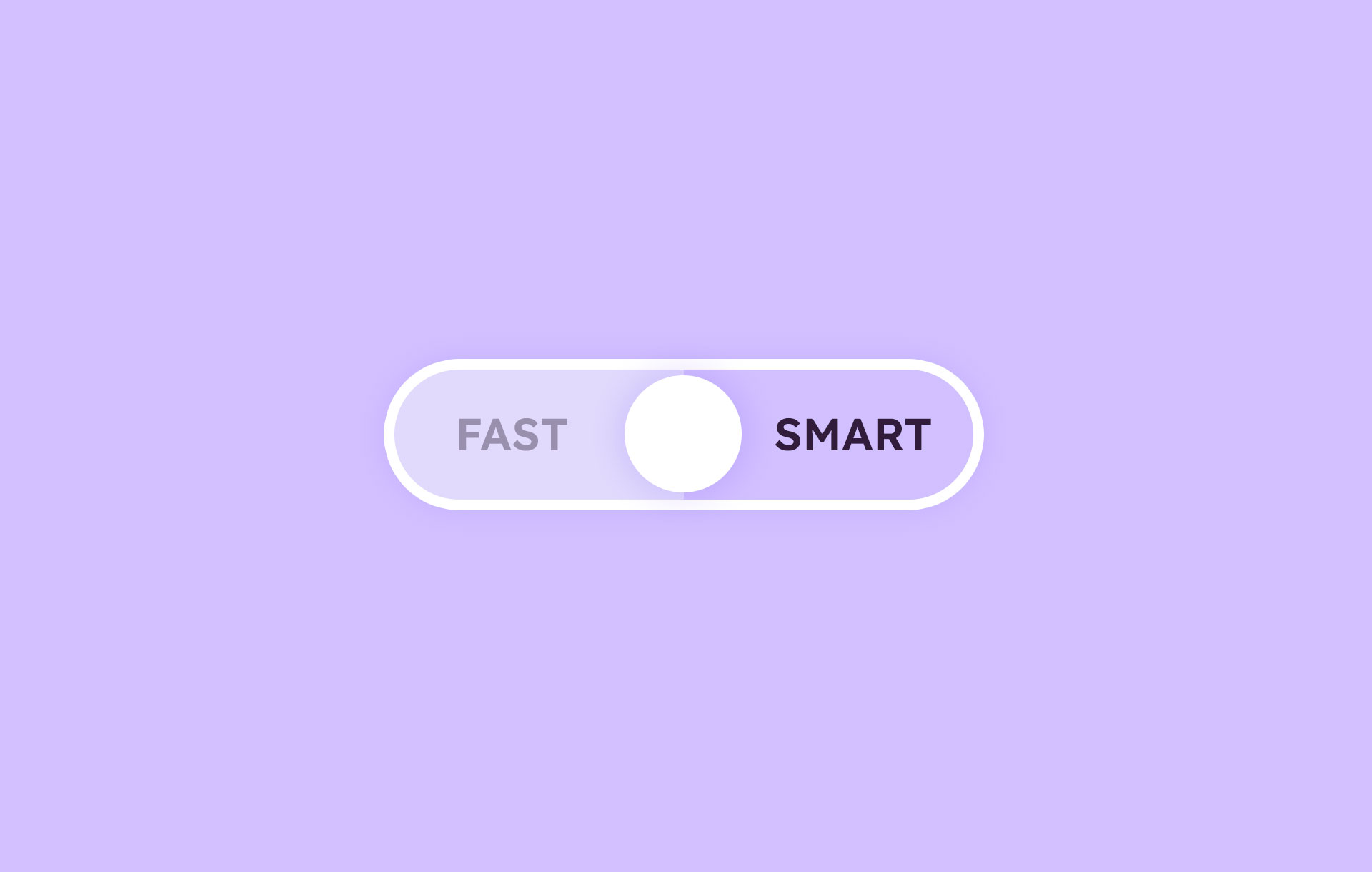
Vibe-coding is having a moment and that’s clear if your LinkedIn feed looks anything similar to mine:
There’s something about Devin’s post that strikes a nerve—because while vibe-built apps feel magical in the moment, they also tend to come with…surprises. The kind you only discover once the real users start using it.
And that’s the tension.
Because while vibe coding is useful, it’s also overhyped. Depending on who you ask, it’s either the future of building or a fast track to a messy, unmanageable product that leaks your user’s data and keeps your engineer up at night.
We wanted to look past the hype, so we asked a few thoughtful Good Product Club builders: where does vibe coding actually help, and where does it fall apart?
Here’s what they told us.
A brief history of vibe coding
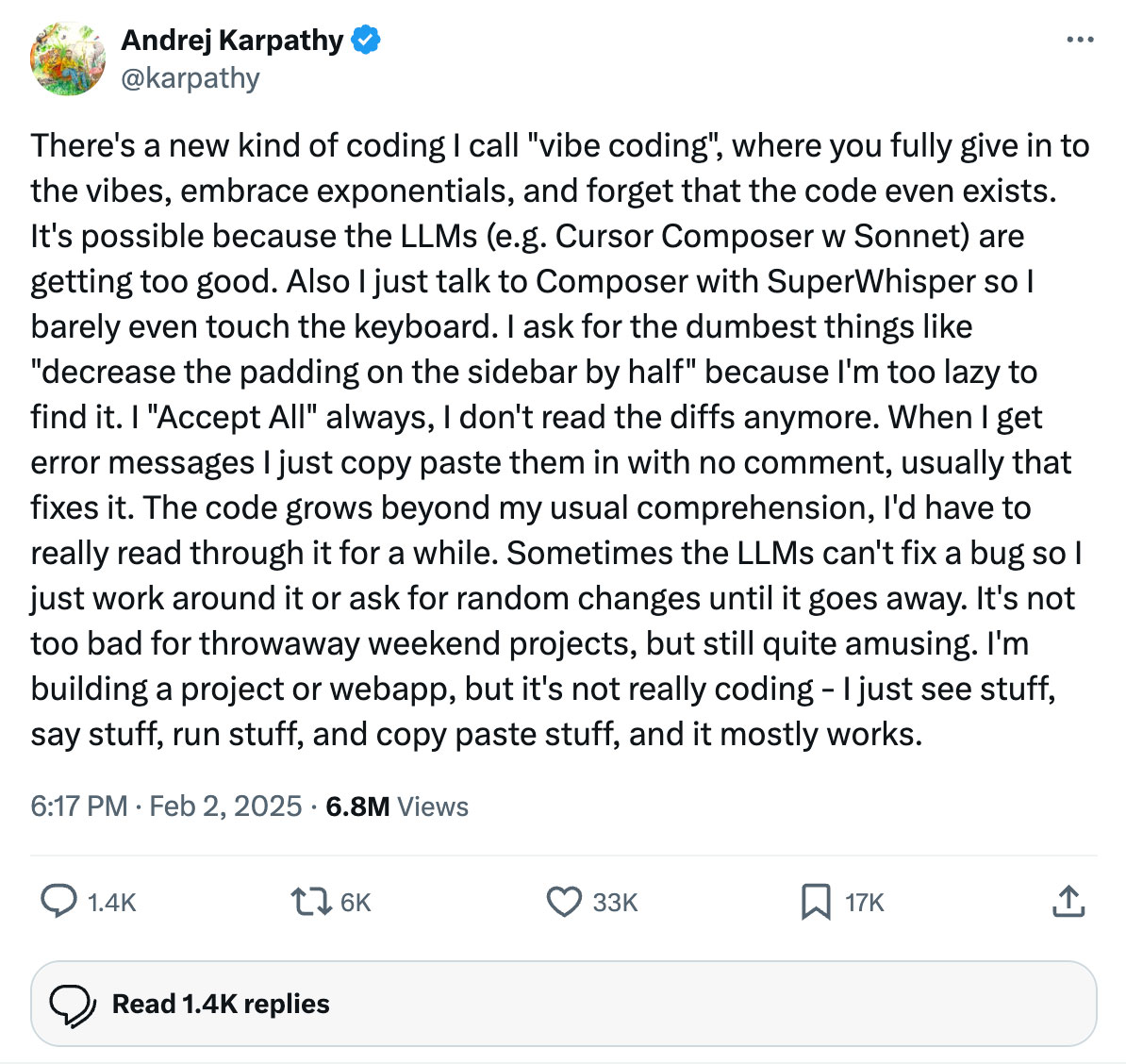
As far as my research can tell, the idea of vibe coding was introduced by Andrej Karpathy in early 2025. In a post on X, he described a new way of working with AI: fully leaning back, letting the model generate code, and “forgetting the code even exists.” It captured something lots of builders were already doing quietly but hadn’t given it a name.
A Redditor summed it up even more bluntly:
“AI enthusiasts are creating cobbled together apps using AI programming tools with little to no knowledge of actual coding. And they’re doing it off of vibes.”
Within weeks, vibe coding had become a genuine cultural moment in tech. It resonated because it described a real shift: AI coding tools had gotten good enough that you could get something working without understanding much of what was underneath it.
The shift has turned anyone with a good idea into a potential builder, which is incredibly exciting. But as work moves away from weekend projects and into real-world apps, the stakes get much higher.
As your friendly neighborhood Spider-Man put it, with great power comes great responsibility—and in this case, that responsibility usually involves making sure your app doesn't fall apart the second a real user touches it.
Now that we’ve set the stage, let’s get into how product builders are approaching vibe coding today.
Vibe coding is a power tool, not a beginner one
People with coding experience tend to get the most out of vibe coding. They already have the mental models. They know what “good” looks like. They can spot when the AI is generating something weird. They can course-correct without losing the plot.
Beginners, on the other hand, often don’t have that safety net. They move fast, but they don’t always know when they’ve wandered into a dead end. A tool that feels magical to an experienced developer can feel like a trapdoor to someone still learning the basics.
"I think it's an incredible way for people already experienced in coding and development to express ideas quickly and get concepts out there fast. For everyone inexperienced in coding, it's either a fast way to make a mess, or an easy way to build something for someone more experienced to take and finalize."
 Asia Orangio,CEO & Founder @ DemandMaven

Her point echoed what we heard from others, like:
- Speed doesn’t erase the need for judgment
- Prompting your way to a feature is doable
- Prompting your way to a well-architected system is a different problem entirely
- Good system design still requires a human brain thinking through edge cases, tradeoffs, and how this new chunk of code will work with your existing codebase
And yet, there is a bright side. Asia calls out how vibe coding is perfect for low-stakes building and she’s right. Prototypes. Experiments. One-off tools. Anything where failure is cheap and learning is the goal.
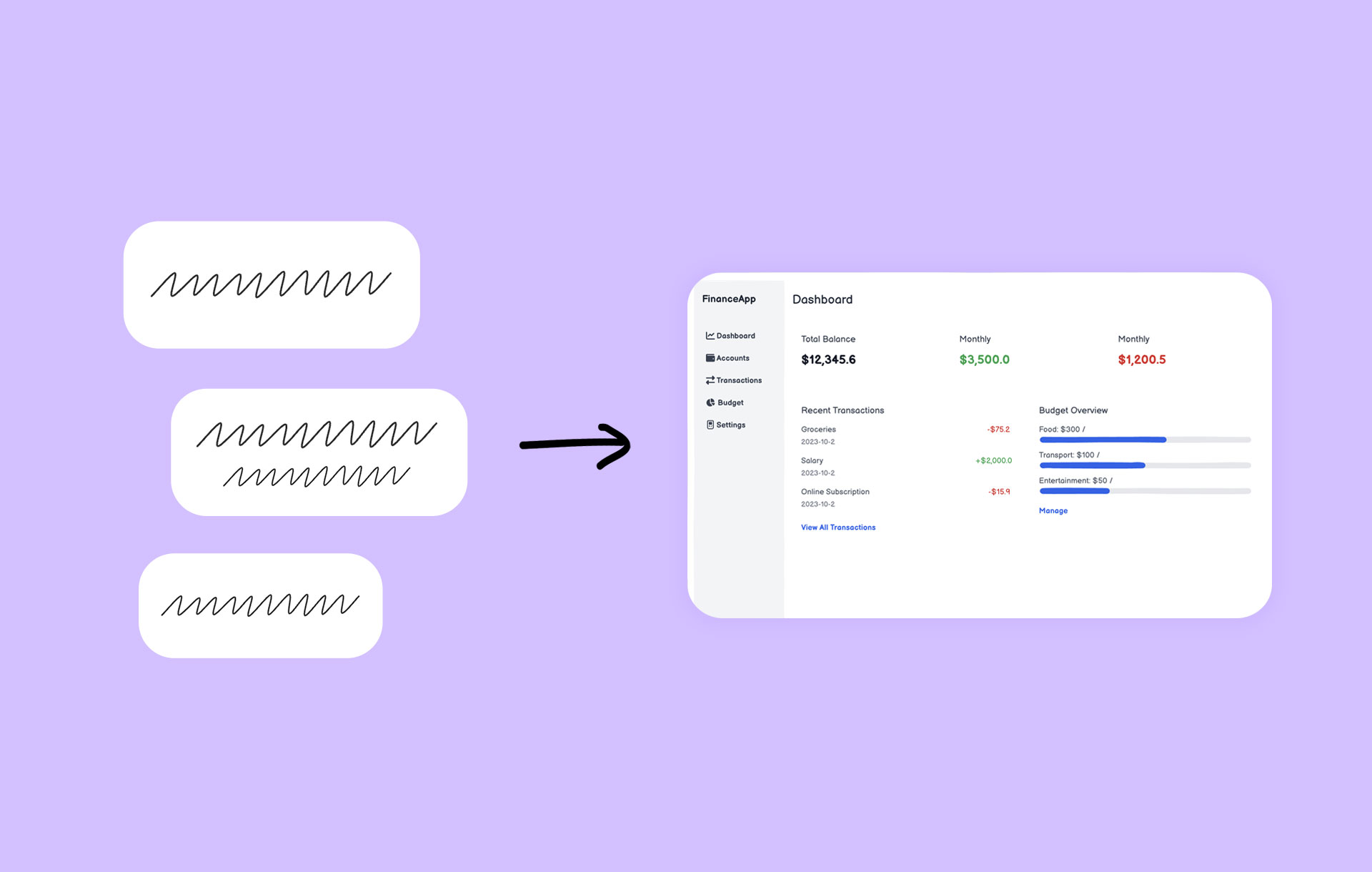
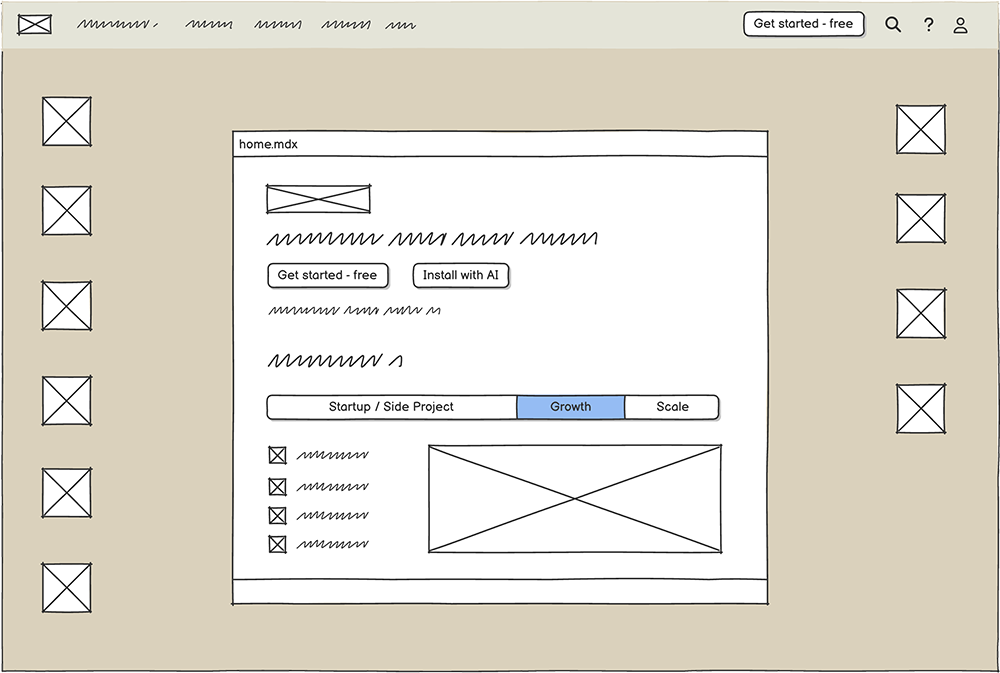
Which is exactly why low-fidelity prototyping pairs so well with moments like these. If vibe coding can get beginners into trouble fast, vibe prototyping—sketching ideas in Balsamiq before you build—gives you a safer way to explore. You can move quickly, test different directions, and hand something off without worrying about whether the architecture will collapse under its own weight.


Vibe coding is great when the stakes are low, but risky at scale
Vibe coding isn't inherently good or bad. The real question you have to ask is: “What happens if this breaks?” When the stakes are low, vibe coding really shines. But when the stakes are high, it can quickly turn into a very expensive adventure.
"It's tough to make a scalable platform from vibe coding alone; you'll eventually need a senior architect to actually think about how all the parts fit. Excellent, though, for low-stakes building!"
Asia Orangio,CEO & Founder @ DemandMaven
If you’re a visual learner, here’s an even easier way to think about it to give you an idea of when and where to try it:
| Great for vibe coding | Risky for vibe coding |
|---|---|
| Basic internal tools | Customer-facing apps |
| Prototypes | Anything that needs scale |
| One-off scripts | Security-sensitive builds |
| Quick MVP tests | Long-term codebases |
And then there’s the “tools doing too much” problem.
You can use an AI tool to generate a login form with so much unnecessary scaffolding that it becomes harder to learn from, not easier. Sometimes the model is so eager to help that it builds a cathedral when all you needed was a shed.
"These tools love to be helpful, but sometimes they’re a little too helpful. You ask for a login form and suddenly you’re looking at a full authentication system. Great for production, terrible for learning."
Peldi Guilizzoni,Founder and Product Designer @ Balsamiq

Ultimately, vibe coding is a fantastic way to play and experiment, but it’s often a less-than-ideal way to actually learn how a system works.
Less vibe, more intent
Once you see where vibe coding shines—and where it starts to wobble—the next shift becomes obvious. The early “lean back and let the model cook” era was fun, but that moment has passed. The tools have evolved, and so has the work.
What started as a one-shot novelty now asks more of the person behind the keyboard. You’re no longer tossing a prompt into the void and hoping for magic. You’re juggling context, reviewing outputs, stitching pieces together, and making judgment calls the whole way through. It’s still fast, but I wouldn’t say it’s effortless.
We’re moving away from passive observation and toward a more active, directed way of building. Here’s how that shift looks like in practice:
| Early vibe coding | Vibe coding today |
|---|---|
| Single prompt, one-shot results | Orchestrating multiple agents |
| Leaned back | Leaned in |
| Minimal context needed | Heavy context switching |
| Passive observation | Active intervention |
| The AI drives | You direct |
"Vibe-coding coined and captured a transformative moment where we were all in awe of what prompts could one-shot. We leaned back and looked at it in full glory. Now I’m orchestrating multiple agents and there’s less vibe, more intent and intensity. Leaned in. The vibe that’s left is the one you need to take: a well-needed break after an intense session of context switching between agents. More needed than before."
Padraig McKee,Head of Product & Design @ PR.co

The more powerful these tools get, the more thinking they demand. You save time when you do the thinking work upfront. You lose time—sometimes spectacularly—when you skip it. Protect your energy by:
- Time-boxing your sessions
- Documenting context before you step away
- Waiting to start a new agent thread until you’re rested and refocused
The tools can sprint. Your brain can’t. This shift toward intentionality is also why low-fidelity thinking matters more than ever. When you sketch first—map the system, the flow, the logic—you give the AI something solid to build from. Better thinking in, better code out.
Vibe coding is turning us all into systems thinkers
As vibe coding matures, something interesting is happening behind the scenes. The people getting the most out of these tools aren’t the ones writing the longest, most complex prompts—they’re the ones thinking at a strategic level. They’re treating AI less like an autocomplete engine and more like a set of agents that need guardrails.
"A lot of companies are already letting AI write most of their code, and I think the future of building will look more like a conversation. What excites me most is that it’s making systems thinking cool again."
Chris Silvestri,Messaging strategist and conversion copywriter @ Conversion Alchemy

He’s right. Good prompting doesn’t come from describing what you want, hitting “send,” and hoping for the best. Good prompts are written when you understand the system well enough to know what to ask for, when to intervene, and how to judge what comes back. That’s the orchestrator role—and it’s becoming a non-negotiable skill.
The best PMs hold the whole system in their head. They understand incentives, constraints, and how one decision ripples through everything else. Vibe coding is pushing developers in that same direction. It’s making architecture, flow, and structure relevant. And it’s reminding everyone that the thinking layer still belongs to people, not AI.
"I love using AI to get a first draft on the screen, but I don’t just let it run wild. To me, the magic is in human-in-the-loop prototyping. I’ll use a prompt to generate the initial structure, but then I immediately step in with direct manipulation—moving buttons, adjusting the hierarchy, and trimming the fat.
It’s about using AI to speed up the 'doing' so I can spend more time on the 'thinking.' You want to be the architect directing the tool, not just a passenger along for the ride."Peldi Guilizzoni,Founder and Product Designer @ Balsamiq
Think before you vibe
Vibe coding can be fast, fun, and surprisingly powerful—but only when the thinking comes first. The builders who get the best results aren’t the ones firing off the most prompts. They’re the ones who pause long enough to understand what they’re trying to make.
That’s the real shift happening right now. AI can generate code at lightning speed, but it still needs direction. It still needs structure. It still needs someone to hold the bigger picture. When you skip that step, you’re on the fast track to rework, confusion, and “why does this function exist?” territory.
This is where low-fidelity thinking earns its keep. Sketching the flow. Mapping the system. Getting the logic right before you ask an agent to build inside it.
And that’s exactly why Balsamiq fits into this moment so well. A quick wireframe gives you the clarity you need right away. It becomes the blueprint and the sanity check. Your prototype becomes the prompt.
So yes—vibe coding has its place. But the teams who thrive with it are the ones who slow down just enough to think first, sketch early, and build right.